English
 4 min Reading time
 You might not think so in recent days, but 2025 was actually an exceptionally sunny year. According to the KNMI (Royal Netherlands Meteorological Institute), we enjoyed an average of 2,110 hours of sunshine in the Netherlands, which is considerably more than the long-term average of 1,774 hours of sunshine per year.
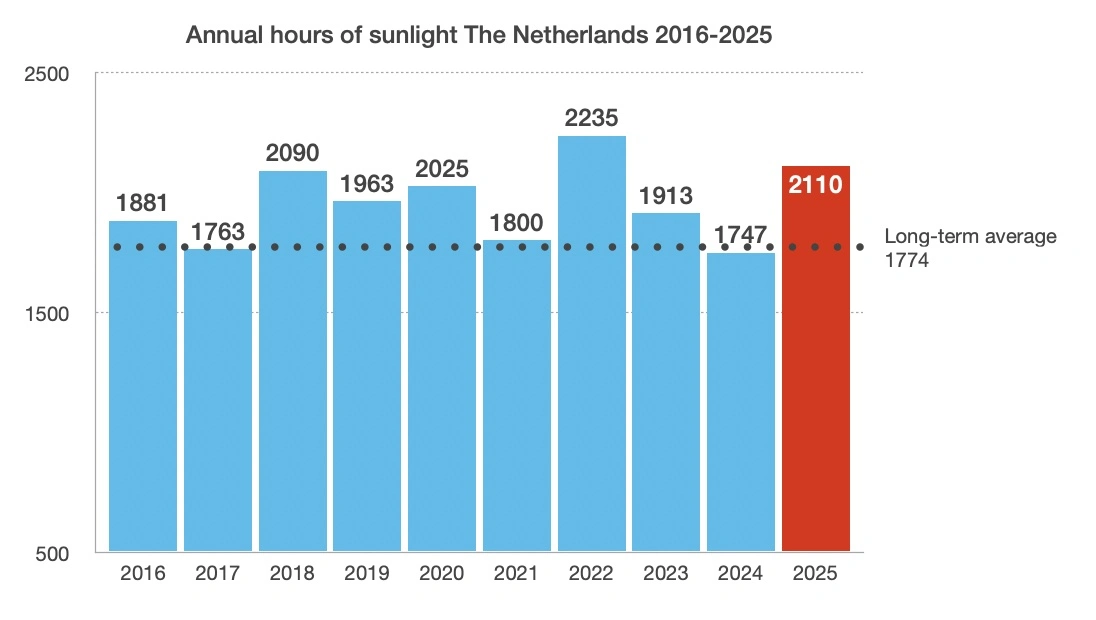
2025 had many more hours of sunshine than an average year (source: KNMI)
This made 2025 the second sunniest year since records began. Only 2022 was better in terms of sunshine. The only months that truly underperformed were January and October, while spring was exceptionally sunny. March was even the sunniest month of March ever recorded!
Even this past month of December was sunnier than average, although that doesn't mean a lot. Most days were grey, but the few sunny days around Christmas made up for it, ensuring that December 2025 still had 68 hours of sunshine, compared to an average of 58.
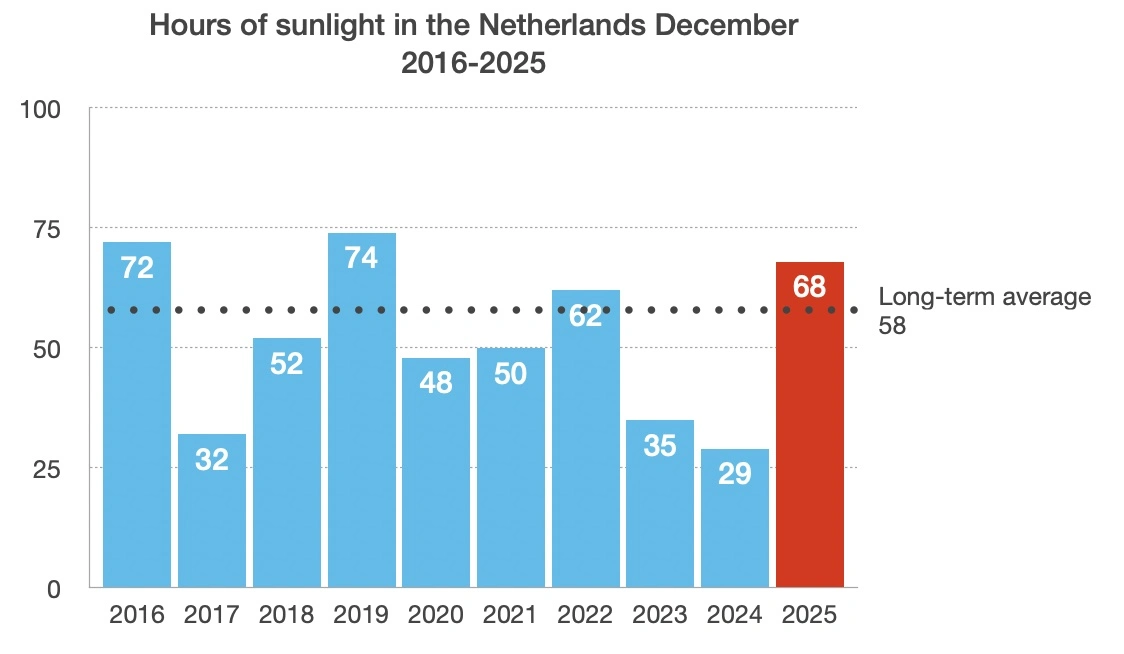
Last December was also sunnier than normal (source: KNMI)
Home batteries had a somewhat mixed story this past year. Trading on the imbalance market yielded much less than predicted – although there's inherently little to 'predict' with this type of trading. Frank Energie's trading index, which they claim should have an average value of 100, didn't actually touch that average level in any month of the year. As a result, earnings lagged considerably.
On the other hand, there were significant differences between the lowest and highest daily prices on the EPEX spot electricity market, particularly in spring and early autumn. The graph below shows what you could theoretically earn by charging with a 10 kWh at low prices and discharging at high prices. This line clearly shows an upward trend over the years. This means that a home battery that can respond to dynamic prices is becoming increasingly attractive. However, there is a clear difference between the months; for example, last December wasn't such a good month because the highest and lowest daily prices didn't differ much from each other.
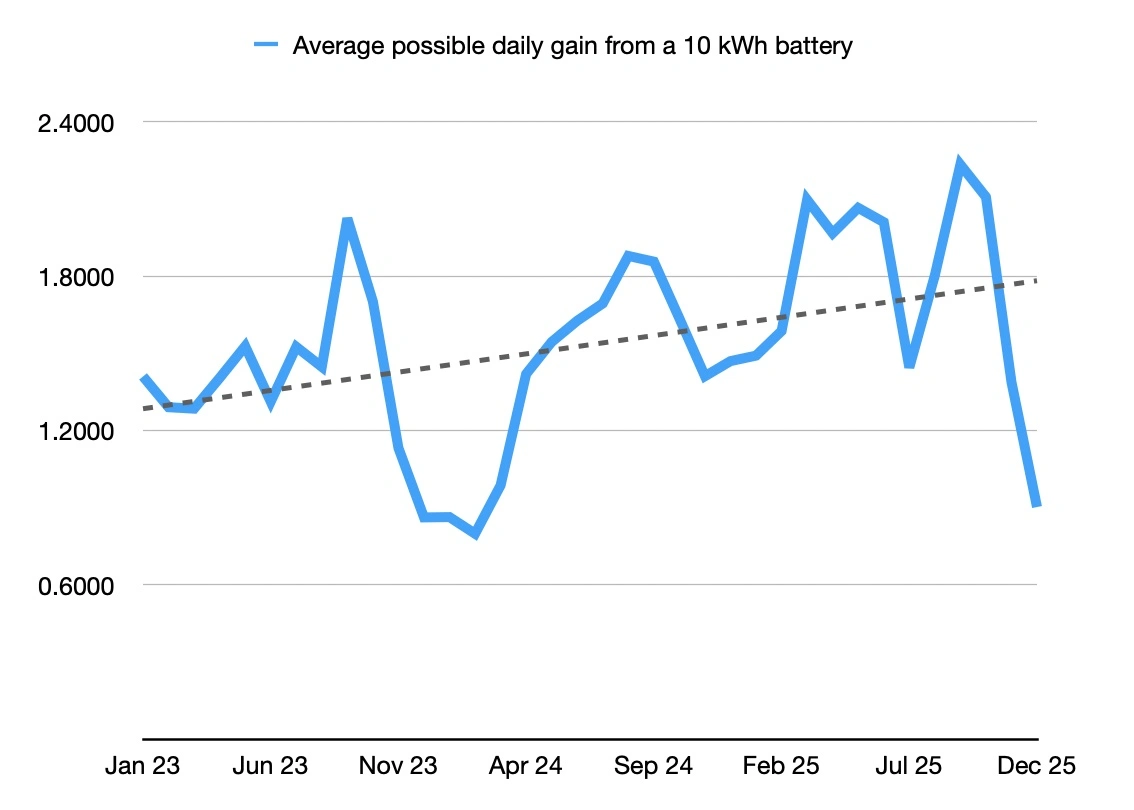
Over time potential earnings increase thanks to the daily price fluctuations on the EPEX market
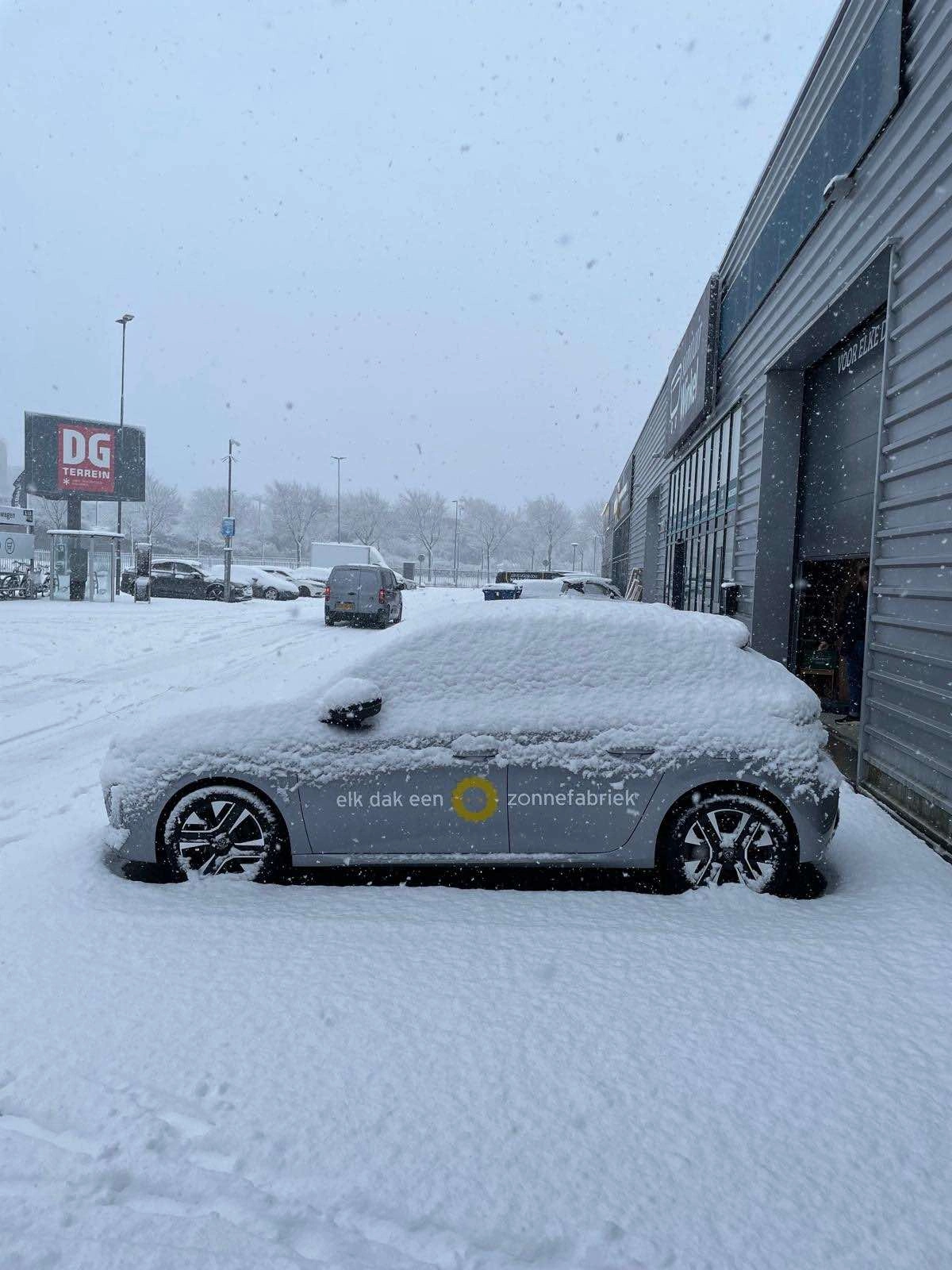
We've now arrived in 2026 with quite an interesting start to the year: lots of snow and therefore no solar energy output at all! Many people will have received a warning message from their system: no need to worry, everything will start up again once the snow has melted. The chaotic winter weather actually turned out to be a positive for imbalance trading: when the trains suddenly stop running, demand for electricity in the Netherlands suddenly drops significantly, disrupting the grid balance. At times likle those, imbalance trading offers significant, if temporary, gains.
The very shortest days of the year are behind us: from now on, your panels can operate for a few minutes more every day. We wish everyone high yields and benefits from their Zonnefabriek systems and a happy and healthy 2026!