English
 6 min Reading time
 Installing a home battery yourself by simply sticking a plug in the socket; that sounds very appealing to many people. A number of comapnies offer such devices for people who want to increase the self-consumption of their solar panels at the lowest possible cost.
The principle is simple: the home battery comes with a plug attached that you can plug into a socket anywhere in the house. Since the system needs to know when there is a surplus of solar power, a device is attached on the 'P1 port' of the smart meter in the meter board. This device communicates wirelessly with the battery, allowing it to know when to charge or discharge. The battery performance can be monitored via a separate app.
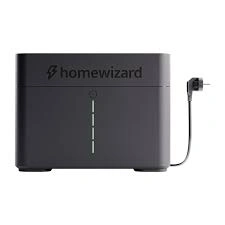
Plug-and-play home battery with plug (source: HomeWizard)
A plug-and-play battery is nice and simple, but that naturally means that it comes with a number of limitations:
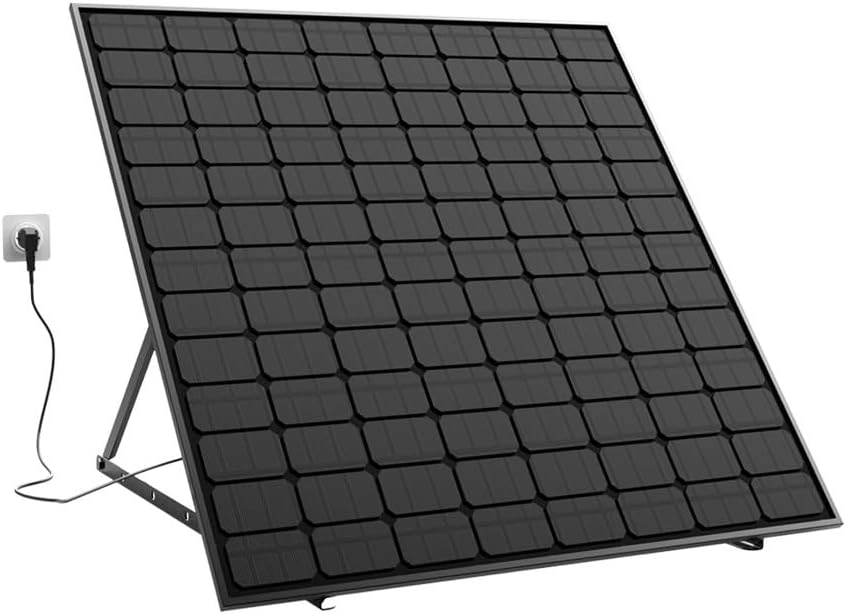
Solar panel with socket plug (source: Amazon)
In addition to plug-and-play home batteries, there are also plug-and-play solar panel sets for sale. These usually consist of one or two solar panels with a small built-in inverter with plug, which can be plugged into the socket.
In Germany, they appear to be particularly popular for people who do not have a roof, but only a balcony. In the Netherlands, we also used to have quite a few of these small plug-and-play systems 15 years ago. These were usually sets of a number of solar panels often connected to a Mastervolt Soladin inverter (a Dutch product!) that was limited to feeding in max 2.25 A of current into an existing socket. At some point, this set-up was no longer allowed: the following provision was added to the NEN1010 (the rules for electrical installations): 551.7.2 b) the generating unit may not be connected to the final circuit with a plug and socket.

A familiar image from the past: the Mastervolt Soladin inverter that could be connected to a wall socket
In the latest version of the NEN1010, this article has been removed again, which means that it is now once again permitted to plug a small set of solar panels into a socket. However, you must make sure that the socket in question is on a separate circuit: other consumers of electricity should not be connected to the same circuit.
Zonnefabriek does not sell plug-and-play home batteries or solar panels. We believe that in the long run it is better to choose high-quality products that are installed by experienced and well-trained installers. After all, these are products that have to safely guide considerable amounts of electricity through your home for many years.
Many electrical specialists are concerned about the ever-increasing currents that flow through outdated distribution boards, now that we are all doing more and more things electrically. With plug-and-play systems, the temptation can be great to connect more and more small sets here and there in a home, which can lead to overheating in the disribution board and in the electrical wiring in the house. The grounding of some products also leaves much to be desired, which can potentially lead to unsafe situations.
In addition, we believe that poor communication between products from different brands can lead to inefficiency. If the solar panel inverter is from brand A, the electric vehicle charging station from brand B and the batteries are from brand C, the interaction between them is usually not optimal, which could lead to waste. In our opinion, having everything from one source (with a clear overview of energy flows on a single platform) is the better way of doing things.
Finally, there is also the aspect of service and support, both between an end user and an installer, as well as towards the distributor and/or the manufacturer of the products. With every product there is a chance of problems and malfunctions appearing. If anything like that happens, it's important to be able to rely on the service and warranties of reputable parties, even after many years of use.
For all these reasons, you will not find plug-and-play products in our range. If, on the other hand, you are interested in professionally installed solar panels, home batteries and/or charging stations, with fixed connections to the distribution panel, we will be more than happy to assist you!